Every HVAC company in Williamson County will tell you it is the best one. The more useful question is what actually separates a system that runs well for fifteen years from one that struggles by year four. Nearly all of it gets decided before the equipment is ever switched on.
Most homeowners start by shopping equipment. Carrier, Trane, Lennox, and the rest all build capable machinery at comparable tiers, and the spec sheets look similar because they largely are. What varies house to house in Leander is the work around the equipment: whether anyone calculated the actual cooling load, whether the existing ducts can move the air the new unit produces, whether the refrigerant charge was weighed in or guessed at, whether a permit was pulled. A mid-tier system installed carefully will outrun a top-tier system installed carelessly, every time.
Leander has a specific version of this problem. Much of the housing stock went up during a fast build cycle, when systems were routinely sized by a square-foot rule of thumb and dropped into attics with returns that were undersized on day one. A replacement is the one real chance to correct what the builder got wrong. A company that swaps the same tonnage back in and drives away has quietly wasted that chance, and you will not find out for a couple of summers.
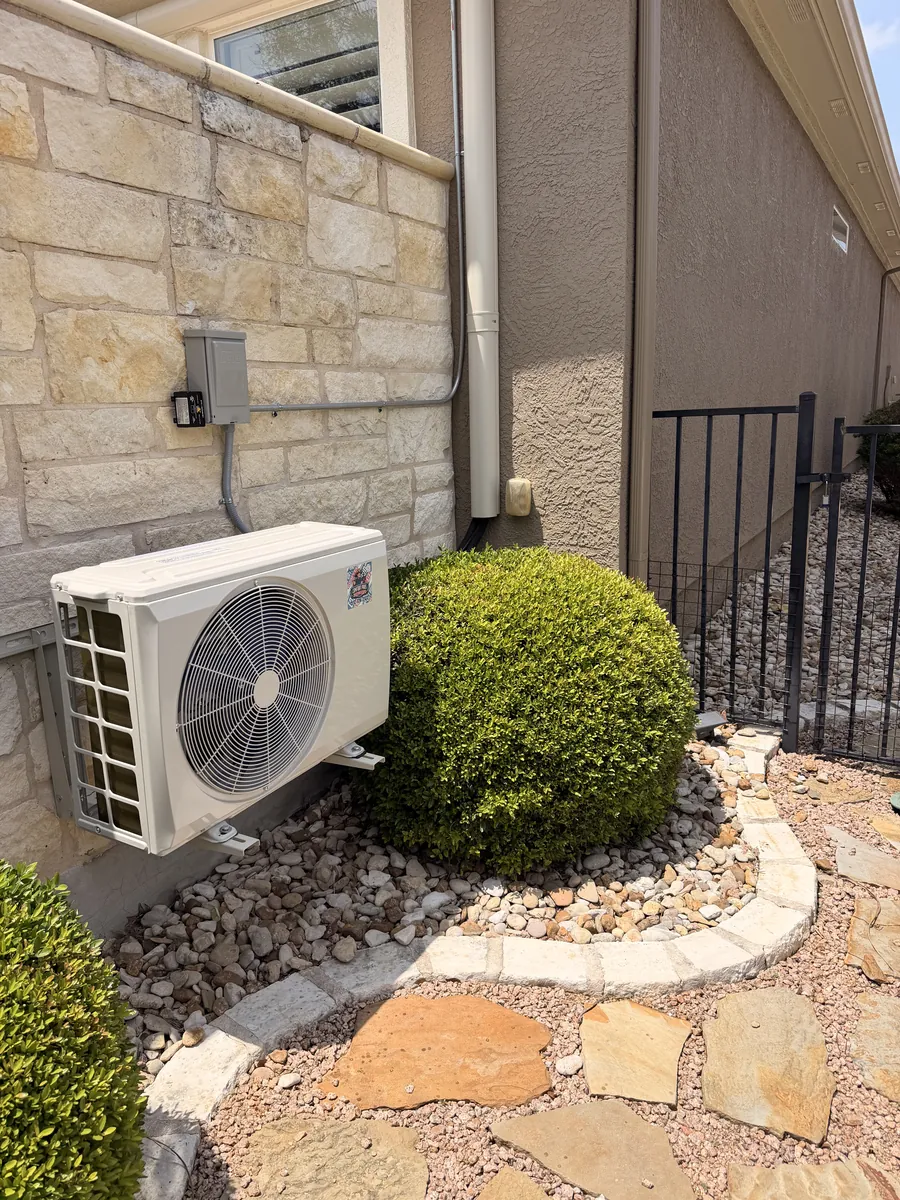
A Manual J calculation accounts for square footage, ceiling heights, window orientation, insulation, and where the ducts run. Measuring the old unit is not the same thing. If the answer is that they will match what is already there, ask what happens if what is already there was wrong in 2007.
Texas requires a licensed contractor for this work, and every legitimate company has a TACL number it will hand over without hesitating. Ours is TACLB116912E. Any number can be checked against the state licensing database in about a minute, and that minute is worth spending.
A system replacement should be permitted and inspected. Companies that skip the permit are usually skipping it to move faster, and the inspection is the only independent check on the work besides you. If a bid comes in well under the others, this is one of the first places to look.
New residential equipment is transitioning to R-454B under the federal HFC phasedown, away from R-410A. Neither is a wrong answer right now, but you should know which one you are buying, because it shapes what service and recharging cost over the next decade. A vague answer here tells you something.
The best condenser sold in Leander cannot fix a return that is too small or attic flex duct that has been sagging since the house was framed. A quote produced without anyone looking at the duct system is a guess wearing a number. Airflow is half of what you are actually buying.
Model numbers for the condenser, coil, and air handler. Line items. The length of the labor warranty. What is not included. A single price written on the back of a card is not a proposal, and it makes an honest comparison against anyone else's bid impossible.
Not only the equipment closet. Square footage, ceiling heights, window exposure, insulation, and where the ducts run. That is the input to the load calculation, and the calculation is what sets the tonnage.
If the duct system cannot carry the airflow the new equipment produces, you hear it before you buy the equipment, not after you notice the back bedroom is still warm in July.
Tiers with model numbers, efficiency ratings, and the labor warranty spelled out on each. You keep the paperwork and take your time. There is no same-day discount here that expires at midnight.
Charge weighed in, airflow verified, permit pulled, and the manufacturer warranty registered in your name so it is genuinely in force the day you need to use it.
Factory authorization is not a sticker a company buys. It carries ongoing technical training requirements and a standard the dealer has to keep meeting, which is why the list of authorized dealers in any given town is shorter than the list of companies selling the brand.
TACLB116912E, insured in Texas, and we pull the permit on replacements. You can verify that license before you ever pick up the phone, which is exactly the order it should happen in.
Not a franchise routing calls in from out of town. The people who size your system are the people who come back if something is not right after the install, and they are a short drive away rather than an hour down 183.
Ask us the same six questions you ask everyone else, then compare what comes back in writing. If you want the service detail first, our AC replacement page covers sizing and installation, and AC repair covers the case where replacing it is not yet the honest answer.